
Raising Spirit-Led Kids
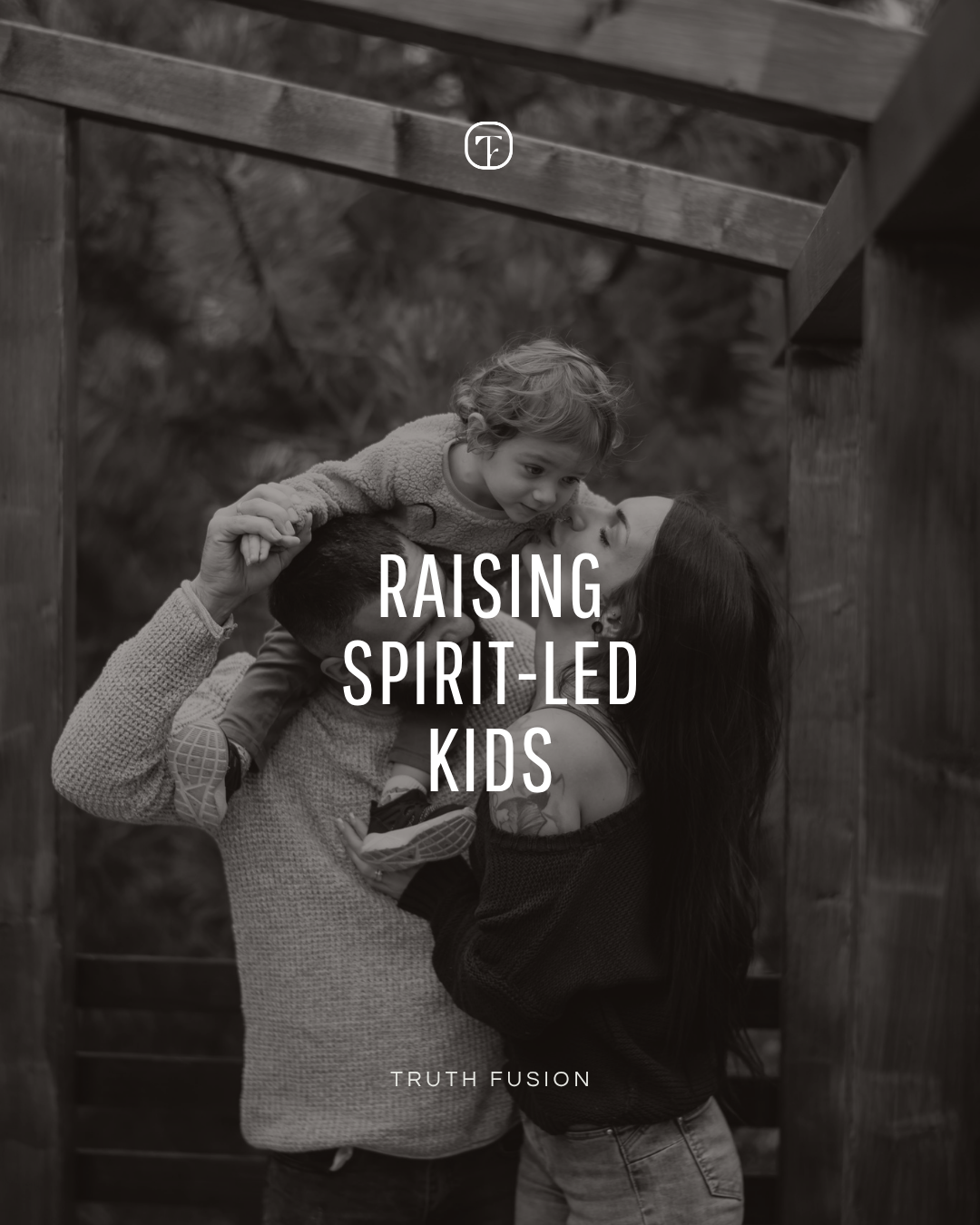
Raising Spirit-Led Kids
What Every Christian Parent Should Know About Shaping the Heart,
Not Just Correcting Behavior
There is a particular kind of spiritual crisis that happens somewhere between a child screaming in the grocery store, and a parent whispering through clenched teeth, “We are going to talk about this in the car.”
Every parent knows the moment.
Your child is on the floor because the banana broke in half. Or because the blue cup is suddenly offensive. Or because their sibling looked at them with the wrong eyebrow. You are standing there, trying to remember everything you believe about grace, patience, and sanctification, while also wondering whether leaving the store without groceries counts as a reasonable life choice.
And somewhere in the middle of that chaos, the words from Galatians 5 float through your mind:
Love. Joy. Peace. Patience. Kindness. Goodness. Faithfulness. Gentleness. Self-control.
Beautiful words.
Until you are raising actual children.
Then those words become painfully practical.
Most Christian parents deeply want to raise children who embody the fruit of the Spirit. We want children who are kind when no one is watching, truthful when lying would be easier, patient when life disappoints them, gentle with those who are vulnerable, and steady when emotions rise. We want children whose faith becomes more than memorized answers and Sunday behavior. We want the gospel to take root in their character.
Yet many parents accidentally turn the fruit of the Spirit into a behavior chart.
Be loving.
Be joyful.
Be peaceful.
Be patient.
Be kind.
Be good.
Be faithful.
Be gentle.
Control yourself.
The problem is that fruit cannot be demanded into existence. Fruit grows from a living root system.
But Scripture tells us something even deeper: fruit is not ultimately produced by human effort, better parenting techniques, or a perfectly structured home.
Fruit is the work of the Holy Spirit.
This means that Christian parenting is not merely behavior management or even character formation.
It is cooperation with God.
Parents plant.
Parents water.
Parents correct.
Parents model.
But only the Spirit can transform a heart.
That is true for the child.
And if we are honest, it is equally true for the parent. No amount of parenting books can produce supernatural patience in a sleep-deprived mother. No communication strategy alone can manufacture gentleness in a frustrated father. At some point, every Christian parent discovers that raising children is not simply exposing what is immature in the child—it is exposing what still needs the Spirit’s transforming work in us.
That is not failure.
That is discipleship.
That means Christian parenting is deeper than behavior management.
It is formation.
A child may learn to say “thank you” before gratitude has taken root. A child may apologize while still plotting revenge over Legos. A child may sit still in church while their inner world is full of anxiety, shame, resentment, or confusion.
External behavior matters, of course. Children need limits, correction, consequences, and guidance.
Yet the deeper question is this:
What kind of inner life are we helping this child develop?
The fruit of the Spirit is evidence of a heart being formed by love, truth, security, correction, repentance, grace, and the ongoing work of God over time. It grows slowly.
It grows through relationship.
It grows through practice.
And ultimately, it grows through the quiet, faithful work of the Holy Spirit within both parent and child. Children often learn the fruit of the Spirit first by watching how it lives under pressure. But even before they see it in us, the Spirit may already be quietly at work within them.
A child who pauses before hitting.
A toddler who unexpectedly shares.
A teenager who chooses honesty when lying would be easier.
These moments are not merely signs of maturity. Sometimes they are early evidence that God is doing what only He can do—forming Christlike character from the inside out.
Parents matter deeply.
Our example matters.
Our words matter.
Our consistency matters.
But we are not the source of the fruit. We are fellow recipients of grace, learning to cooperate with the same Spirit who is shaping our children. This does not mean parents must become flawless spiritual examples.
Perfection makes a home fragile.
Children do not need parents who never get it wrong. They need parents who know how to repair. One of the most powerful sentences a parent can say is:
“I was wrong. I should not have spoken to you that way. Will you forgive me?”
That one moment teaches humility, confession, emotional safety, accountability, and grace. It teaches a child that failure does not have to end in hiding. It can become a doorway back into a relationship. This is where psychology and Christian formation beautifully meet. Children are born with immature nervous systems. Their brains are still developing the ability to pause, reflect, regulate emotion, manage impulse, consider another person’s perspective, and choose wisely under stress.
This does not excuse every behavior. It helps parents respond with skill.
When a child melts down, the question is not only:
“How do I stop this?”
The deeper question is:
“What is happening inside this child, and what fruit needs to be formed here?”
Discipline becomes more powerful when it is tied to formation. The home becomes a training ground for the soul. Of course, this also means the parent’s inner life is part of the plan.
Children have a remarkable way of revealing what is still unfinished in us. This is why raising children with the fruit of the Spirit always begins not with asking:
“How do I fix my child?” but with asking:
“Holy Spirit, what are You growing in both of us?”
And in those moments, Christian parenting becomes less about performing and more about surrendering.
Spirit of God, help me pause.
Help me respond instead of react.
Produce patience where mine is thin.
Produce gentleness where frustration is rising.
Produce peace where chaos feels louder than faith.
Because the same Spirit forming the child is also forming the parent. And often, He chooses the ordinary moments of parenting as His classroom.
This is slow work.
Sacred work.
Often inconvenient work.
It happens in minivans, kitchens, bedtime battles, sibling arguments, homework meltdowns, and whispered prayers after everyone finally falls asleep.
And one ordinary day, often after years of unseen practice, fruit begins to show. Not because a parent did everything right. Not because a child never struggled. And all along, the Spirit was doing what only He can do— forming Christ in both parent and child.
Want a simple way to keep planting those seeds at home? One helpful resource is the amazing Kids Devotional Verse Deck by Truth Muse. It gives families an easy way to bring Scripture into everyday moments—around the table, before bed, in the car, or during those small windows when a child’s heart is open to truth.
View the Kids Devotional Verse Deck by Truth Muse here.
Have questions about parenting, faith, or helping your child grow through a difficult season? Truth Fusion offers free consultations for parents who want thoughtful, faith-informed guidance. If you are navigating behavior struggles, emotional overwhelm, spiritual questions, or family patterns that feel hard to untangle, schedule a free consultation. One clear conversation can help you discern the next faithful step for your family.
Join the Community
Together, we can bring healing and hope to individuals and communities, restoring lives, renewing minds, and shining light into the darkest places.
Sign up for our Newsletter and be the first to learn about new initiatives by Truth Fusion and how you can become part of this life-changing mission.
